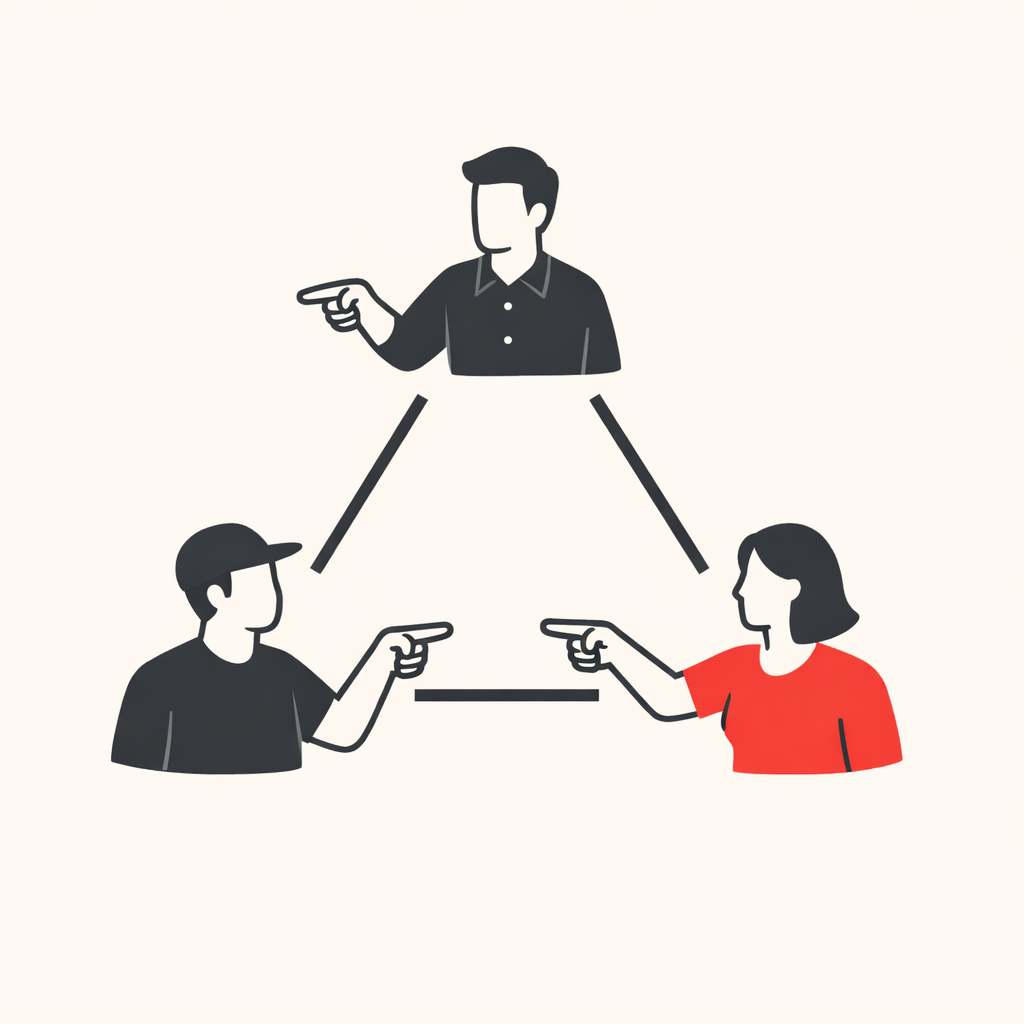
Product managers, engineers, and designers are in a three-way standoff
Marc Andreessen describes how AI creates a Mexican standoff between product managers, engineers, and designers. Each role can now do the others' work. The solution isn't picking one, it's becoming genuinely good at two or three.

Lenny Rachitsky interviewed Marc Andreessen on his podcast about AI's impact on work, skill development, and building companies. The conversation covered everything from population decline to AGI, but one observation stands out for anyone building products: the traditional boundaries between product management, engineering, and design are collapsing.
Marc describes it as a Mexican standoff. Every engineer now believes they can be a product manager and a designer because they have AI. Every product manager thinks they can code and design. Every designer knows they can be a product manager and write code. They're all aiming at each other, and they're all correct.
AI is good enough at all three disciplines that someone competent in one role can now genuinely handle tasks from the other two. The question isn't whether this is happening. It's what you do about it.
Depth prevents commoditisation
The obvious response is to become good at multiple things. But Marc's advice on coding applies across all three roles: if you want to be mediocre, just let the AI do it. If you want to be one of the best, you need to understand what's happening all the way down.
He uses coding as an example. The best programmers aren't just prompting AI and accepting whatever comes back. They're orchestrating multiple AI coding sessions, evaluating output, catching errors, and understanding why the AI made specific choices. You can't do that without knowing how to code yourself.
The same applies to product management and design. AI can generate product specs and create interfaces, but it can't evaluate whether they're actually good. That still requires human judgment grounded in real understanding of the domain.
Marc spent time explaining this to his 10-year-old son, who uses Replit and Claude to build Star Trek simulators. His advice: understand how to write code yourself, because the AI will give you code, and if you don't know how to evaluate it, you're stuck.
The combination is what matters
Marc references Scott Adams, who said he could have been a decent cartoonist or decent at business, but being good at both made him spectacularly good at Dilbert. The additive effect of being good at two things is more than double. Being good at three things is more than triple.
You become valuable through the combination. Hollywood has a term for people who can write and direct: auteurs. They're the real creative forces that move the field. The same pattern exists everywhere. A structural engineer who understands earthquake retrofitting brings that lens to everything they analyse.
Marc's friend Larry Summers used to tell people: don't be fungible. Don't be replaceable. If you're just a designer, just a product manager, just an engineer, you can theoretically be swapped out. If you have a rare combination of skills, you become essential.
He suggests thinking of it as an E lying on its side rather than a T. You want depth in at least one domain, but you want to be genuinely capable in two or three areas. Not just familiar with them. Actually good enough to do the work.
Tasks change faster than jobs
Marc makes a distinction economists use: jobs are bundles of tasks. People focus on job loss, but what actually changes is which tasks disappear and which new ones emerge.
His example: executives in 1970 didn't type their own memos. They dictated to secretaries. Then email arrived, and secretaries would print emails for executives to read and handwrite replies, which secretaries would type and send. Now executives do their own email, and assistants handle different tasks like travel planning and event coordination.
The executive job still exists. The secretary job still exists. The tasks shifted.
The same thing is happening now with AI, except faster. If you're a product manager, the tasks that make up your job are changing. If you're an engineer, the tasks are changing. The job titles might persist, but in five years, "engineer" might mean something quite different from what it means today.
The people who adapt by expanding their skill set and staying close to the actual work will be fine. The people who treat their current role as fixed will struggle.
What this means for building
Small teams can now do what used to require much larger ones. Someone who can code, design, and think through product strategy can build substantial things alone or with one or two others.
Marc mentions founders now thinking about whether you can have entire companies where the founder does everything by orchestrating AI. That's probably overstated, but the direction is clear: the minimum viable team size is shrinking.
For individuals, the path is straightforward. Pick one domain to go deep in. Then use AI to become genuinely competent in the adjacent domains. Not just surface-level familiar. Actually good enough to evaluate quality, catch mistakes, and make real decisions.
The combination of depth plus breadth is what makes you non-fungible. That's worth more than being world-class in a single narrow domain.