Why Physical AI Will Matter More Than Software AI
Qasar Younis runs a $15bn AI company most people haven't heard of. He thinks physical AI - tractors, trucks, mining rigs - will matter more than software. Here's why he stayed quiet for a decade, and what he sees coming next.

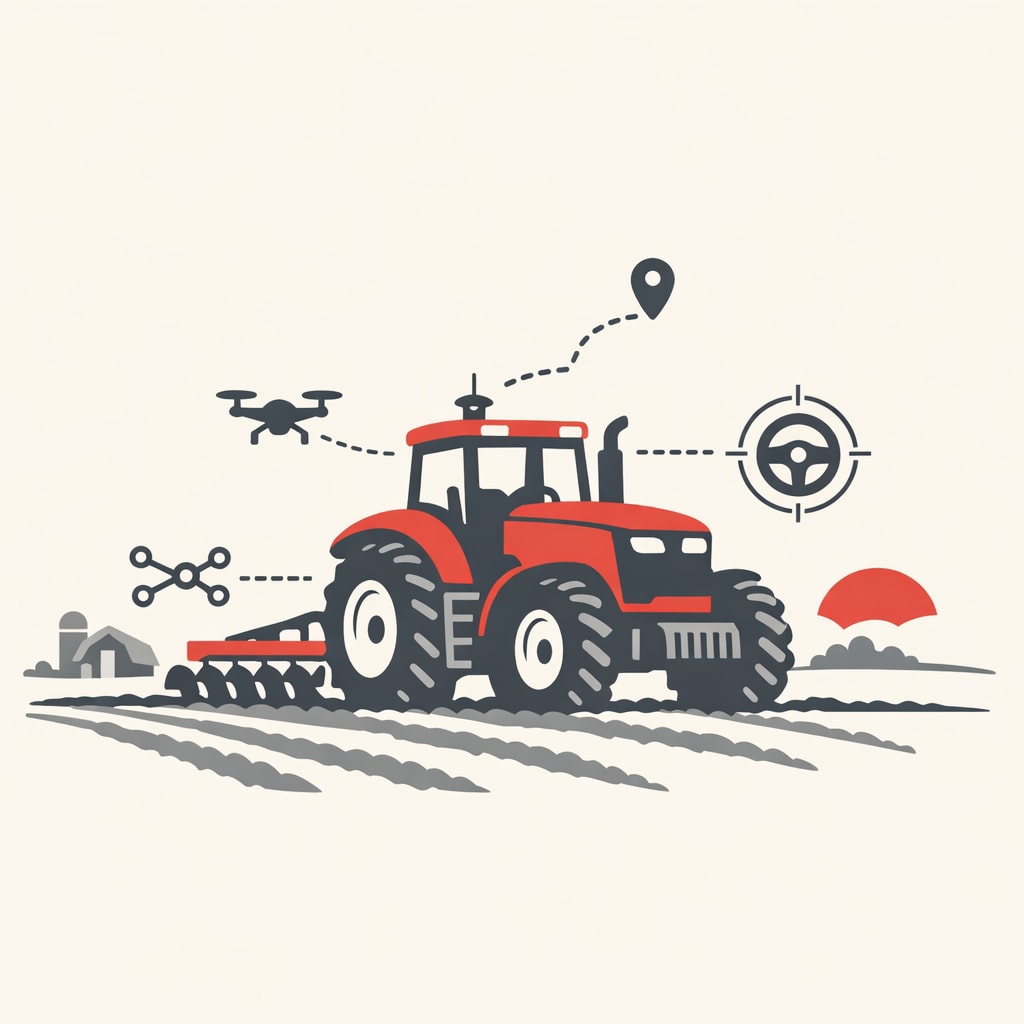
In a recent podcast, Qasar Younis, co-founder and CEO of Applied Intuition, told Lenny Rachitsky that the real impact of AI won't come from coding assistants or chatbots. It'll come from tractors, mining rigs, and self-driving trucks.
Applied Intuition builds AI systems for vehicles and heavy machinery. Eighteen of the top twenty automakers use their software, along with major construction, mining, and trucking companies. The company is valued at $15 billion and has never spent a dollar of the capital it raised.
Qasar's view is straightforward: software AI touches a tiny slice of society. Physical AI will transform industries where people actually need help, and where those people are running out.
The industries that need autonomy now
The average farmer in the UK is in their late fifties. In ten years, many will retire. Twenty years from now, the problem gets worse. The same pattern exists in trucking, mining, and construction.
These aren't jobs people fight for. Long-haul trucking means weeks away from family. Mining is dangerous. The work is hard, the conditions are poor, and fewer people want to do it.
Intelligence in these machines isn't replacing eager workers. It's filling gaps that already exist. A mining vehicle that can operate with some autonomy makes a dangerous job safer. A tractor with AI helps an ageing farmer manage more land.
Over thirty thousand people die in car accidents in the US each year. Self-driving systems, whichever way you measure them, are safer than human drivers. Qasar thinks in twenty or thirty years, we'll look back at human-driven cars the way we look at child labour after the industrial revolution - something that made sense at the time but seems absurd in hindsight.
Why anxiety about AI comes from not understanding it
Qasar's advice for people anxious about AI: spend time with it. Try to get an LLM to understand a cup held upside down. Watch it struggle with basic spatial reasoning. The gap between a nunchuck-wielding robot in a promotional video and a machine that can actually think is enormous.
The nunchuck robots cost $15 million to film. They're pre-programmed. Car factories have had sophisticated robots for twenty-five years. We don't fear welding robots because we understand them. We fear humanoid robots because the gap in our knowledge gets filled with anxiety.
Fear comes from misunderstanding. Learn about the technology, see its edges, and the fear recedes.
The next five to seven years
Every major car company is working on a Tesla-style self-driving product. The technology will become cheaper and more widespread. In five years, most new cars will have some level of autonomy.
This mirrors what happened with navigation systems. They used to cost thousands of pounds and were a luxury feature. Then CarPlay and Android Auto arrived, and free navigation became standard. Full autonomy will follow the same path.
The same pattern will play out in construction, mining, and farming. Machines will gain intelligence. Productivity will increase. Dangerous jobs will become safer.
Why Applied Intuition stays quiet
Applied Intuition has been building for nearly ten years. Qasar only joined Twitter recently. His first tweet got two million views.
The philosophy: the best work happens alone and quietly. Every minute spent on a podcast or writing for public consumption is a minute not spent on customers and product.
This only works if you're already known in your ecosystem. If you're starting your first company, building a following can be valuable. But if you have a network, staying quiet lets you focus on craft.
The company has other unusual practices. Employees clean the office themselves in a weekly "cleaning zen." There's a no-shoes policy. These details sound trivial, but Qasar believes they connect to something larger about care, craft, and not getting wrapped up in your own narrative.
How to make better decisions
Applied Intuition's first value is "speed above everything," but the specific wording is "move fast, move safe." Another value: "our best work is done alone and quietly." A third: "laugh a lot."
The company came up with values by asking why they were succeeding, then writing down the reasons. Those reasons became the values.
On decision-making, Qasar's approach is to remove emotion. Emotions are reactions built from life experiences that weren't optimised for making product decisions. The goal is to surface the best idea, regardless of who brought it or how much momentum exists behind a different path.
This requires holding conflicting ideas in tension. Be humble enough to listen. Then, once a decision is made, move decisively. Assess managers on both openness and decisiveness.
Why most Silicon Valley CEOs lack taste
Qasar thinks many Silicon Valley CEOs don't have great taste. He includes himself in that group.
The reason: narrow life experience. If you grew up in Cupertino, went to Berkeley, and started a company straight out of university, you've never been at the bottom of a large organisation. You haven't experienced bad bureaucracy, antiquated tools, or leadership that doesn't know what's happening.
That experience matters. When you become a leader, you make policies and create culture. If you've never been on the receiving end, you don't know what bad feels like.
Taste develops through broad exposure. Read old books - time filters out noise. Consume ideas from different domains. Backpack around the world. The goal isn't to become cultured for its own sake. It's to understand humans and life well enough to discern what's good.